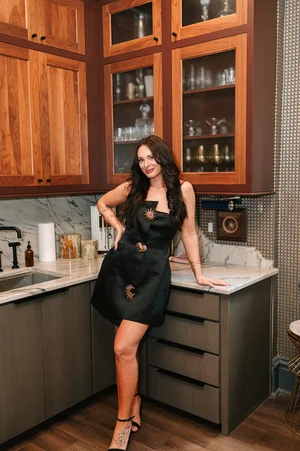
Decorating for Couples with Opposite Styles
How to blend two different styles into one cohesive home
This question came through on Instagram, and I’d be lying if I said I hadn’t been meaning to get to it: “How do I decorate when my partner and I have opposite styles?”
This is so, so tricky.
A lot of times, one of you is moving into your partner’s pre-established home, and you wanna feel like you actually live there, too. Other times, you’re moving into a new home together — and maybe your partner has some, um, strong opinions, drowning you out out. Maybe you can’t stand some of their stuff. Whatever the style conundrum, do I ever have advice for you.
This will be a 3-part series, so absolutely be sure to subscribe here so you get each part delivered to your inbox.
If you and your partner are struggling to blend your styles, this series will absolutely help you whether you’ve lived together for decades or you’re getting ready to move in.
Divide + Conquer Your Styles
First of all, I want to acknowledge that if you’re reading this, there’s a motive in here somewhere. You most likely want to make this work to preserve you and your partner’s sense of self while also making your home actually look good. Or maybe you’re hoping I’ll tell you to just throw away all their stuff and do what you want — I’m onto you.
However, my personal opinion is that blending two styles together is such a cool way to get to know each other better. It’s a fun way to infuse the house with some bomb ass energy and do something no one else is doing in their house, that’s for damn sure.
Listen up: There are two very broad rules I like to dole out from the jump:
Shared spaces require shared style
You each need at least one private space in the home that is just for you to decorate how you want
Let’s focus on rule two first, because the shared spaces are going to require a bit more heavy lifting.
Create Your Own Space Before You Blend Styles
I don’t care if it’s an office, bedroom, bathroom or shed in the backyard; each of you needs a space that you’re allowed to have full creative control over. Of course, I’m not telling you how to live your life, but for couples who each have a very defined style or strong preferences, giving yourselves a space that feels wholly you will alleviate resentment and that feeling like you can’t just be yourself.
I also recommend these be “private spaces,” meaning, these aren’t the places people necessarily hang out when they come over to your house. For example, living rooms, dining rooms and kitchens are largely public domain, but even bathrooms, guest rooms and basements, I consider “private” in that they’re mostly used by intimate invitation.
Ultimately, you can decide what is public or shared domain that you want to blend, and what rooms you consider private, that you can decorate to your whims.
Pull the Room Apart
Once you’ve divided up your own domains, it’s time to focus on returning to rule 1 to blend your two styles. Here are my getting started guidelines:
Pick ONE room to start with
Make it a room that feels most neutral to both of you/most low stakes
Don’t try to be perfect, just look at this as practice and something creative you can do together
First, Clear the Room
I’m going to make a big ask here, but it’s so worth it: Empty out the room. Pretend you’re moving even if you’re not. If you are moving, intentionally keep your things out of the room for a hot minute.
We need to log a couple things first before we move forward:
What do we want to do in the room?
How do we want to feel when we use it?
How do we want others to feel when they come over?


Answer these questions separately and then compare and talk about them. Level-setting expectations before you do anything will help both of you focus and release unnecessary control. I bet you’ll agree on more than you think, and once you have shared purpose, you’re working toward a common goal! YAY!
Next, each of you needs to sort through what just came out of the room and organize your own things into:
Must stay in the room
Must stay in MY designated room
Must stay in the house — elsewhere or storage
It can be donated or trashed
Be honest with yourselves here. Nothing about this step is permanent or life-altering, but it can be a bit emotional. Treat this step like it matters. It sucks to compromise sometimes, and this isn’t about anyone getting their way over the other, but it’s about getting to the root of what really matters so you can move forward on the same page.
Putting Two Styles Back Together
Now you’re going to look for common ground in what you’re keeping.
Any colors overlap? Textures? Even shapes? Be eagle-eyed about it and find as much as you can to agree on with what you already have before you start trying to add more things to the picture.
And actually, you’re not going to be adding anything for a beat. Let the room breathe and feel a little empty or hodgepodge. Give yourselves a beat to see it in a new way and get yourselves used to the idea of something new. Trust me, this is a bit of an uncomfy brain adjustment, but it works.
What’s Next: Color
I meant it when I said you’re not going to be buying anything just yet, because next week, you’re going to pick and plan a color palette… together! You’ve already cleared the space, so next it’s time to come together by learning how to make shared and overlapping decisions.
We’ll start small with it and you’ll walk away ready to take the next step toward making your chaotic space a shared home that you both genuinely love. If you want these Transmissions delivered right to you so you don’t have to hunt them down on the Wild Wild Internet, subscribe and we’ll keep in touch.
Hope to talk to you again soon.