Why Your Home Doesn’t Feel Like You
Ask the Alchemist: “How do I make my home feel like me?”
Everyone wants to be authentic these days, huh?
You want to learn how to make your home feel like you. You want it to reflect who you are. You want to see yourself clearly in the colors on the walls, the decor in the room and the furniture you fill your space with.
Good.
But here’s where soooo many miss the mark: You can’t learn your way into authenticity.
You cannot add your way to “authentic” because authenticity starts with subtraction — stripping away everything external and going inward. But that’s not profitable, is it?
You will be sold your own authenticity if you’re not careful, and that’s exactly why your home still feels off, even after you’ve tried and tried again to connect with your “authentic self.”
Buzz(word) Kill
I don’t use scare quotes to disparage the idea of authenticity — I think that’s what we’re all here on Earth for to begin with. But the “authentic self” has become so convoluted — stripped of any meaning, packaged and resold.
Let’s stop that right now.
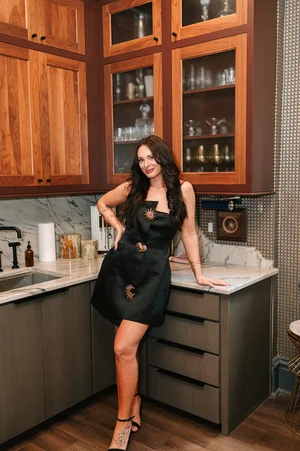
I am a home stylist, yes, but my official title is Interior Alchemist, because this is the exact space I inhabit. Think of me like a guide of sorts, leading you past the tricks of consumerist, predatory authenticity commodification and back to yourself first, so every decision you make from here on out is actually rooted in your true self.
This isn’t an overnight hack, so click out now if that’s what you were thinking. Rather, this is a process — a cycle, really — that repeats in layers. Every “onion” layer removed gets you closer to a home (and self) that truly feels like you — really you — at your core.
Styling an Authentic Home
I created my home styling method, The Foundry Formula, with authenticity at the forefront. It’s seven steps, layered for practicality and intuitive processing. We’ll strip away everything that is not you, and then rebuild, slowly feeling our way through what’s true and what’s been placed upon you as a false truth.
Step 1: Clear Your Space
You’re going to do more than declutter you’re home. You’re going to sever your ties to the things you’ve bought and acquired over the years that misrepresent who you are now or who you’re trying to be. Sometimes this is easy to do, and sometimes it’s hard.
Sometimes fear, guilt or shame will try to lure you into keeping things for all the wrong reasons. Authenticity is about decisive action. Decide what to cut ties with.
Step 2: Choose Color for Emotional Clarity
Stop asking other people what they like and tune into your own discernment. Color carries frequency, so choosing for yourself even when it doesn’t make sense to other people is the only way to have an authentic home.
Don’t misunderstand me, creating a palette that’s cohesive absolutely matters because if it looks like shit (sorry), it will make you feel like shit, even if it’s your favorite color on the wall.
Choosing a primary color to circle your palette around is a decisive action in the right direction, and there are a million tricks to building a palette you feel good about. That’s not the hard part — clarity is. Choose your color for you.
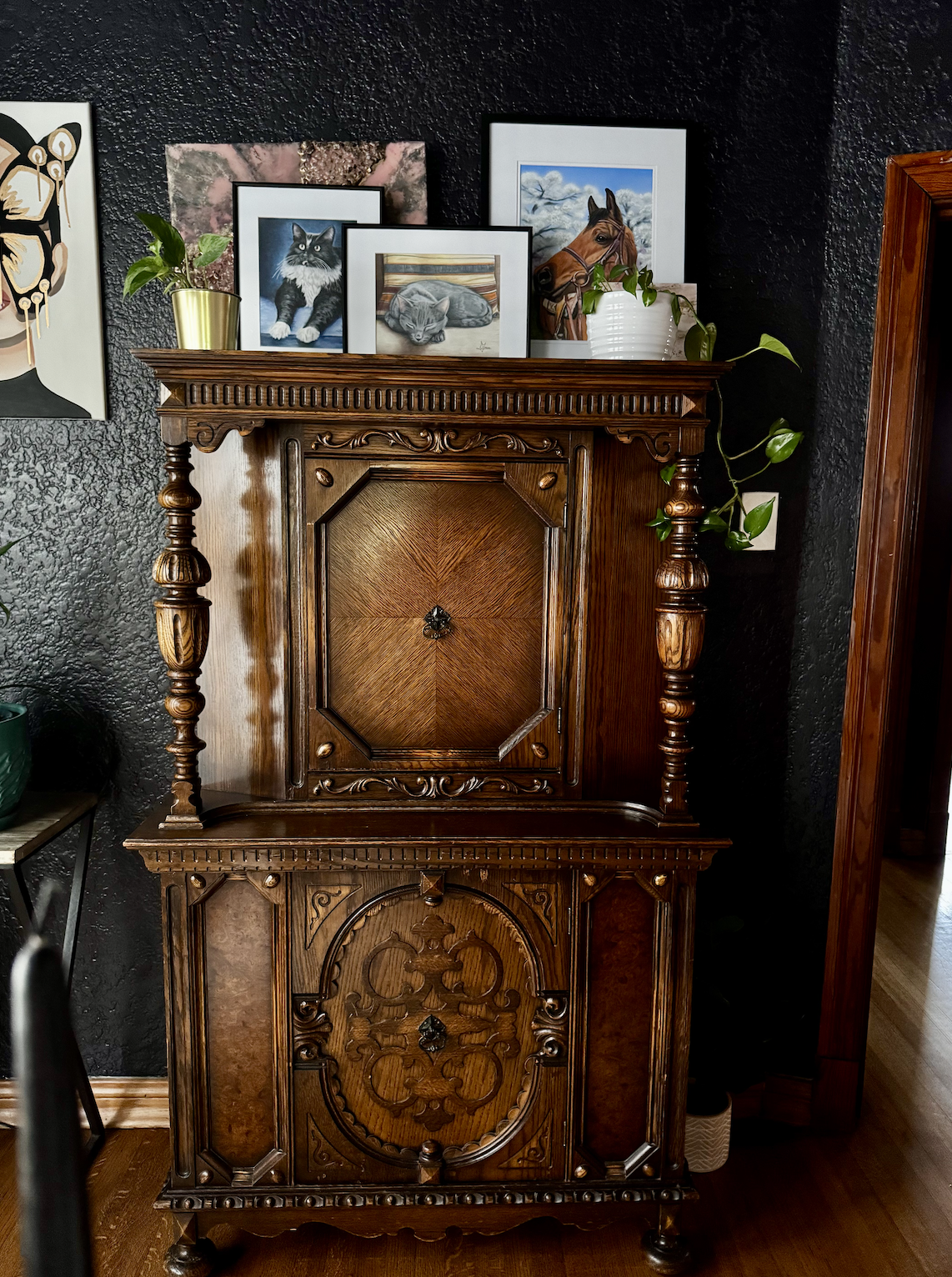
I thrifted this solid oak cabinet, built in 1901, for TWO HUNDRED AND SEVENTY FIVE DOLLARS. ScAmazon could fucking never.
Step 3: Choose Furniture for Foundational Support
I’m not even gonna lie, furniture tends to piss me off because more and more, things are getting more expensive, yet cheaper at the exact same time. For some, you can go ahead and overhaul your furniture all in one go. For others, it takes a priorities list. Figure out which pieces of your furniture suck… the life out of you.
I just pitched a 10 year old Ikea coffee table… because it was a 10 year old Ikea coffee table. Technically, it worked, but I got it at totally different phase of my life, and it felt like it was clogging up my living room with dorm room energy — which, by the way, is completely fine if that’s your current phase of life. A cohesive, well-planned and intentionally chosen Ikea set beats haphazard default choices 11 times out of 10.
“Authentic” furniture is about the support and style you want and need right now, and my hottest tip is to start thrifting. You can get much higher quality pieces at way lower prices even than ordering cheaper-made product on Amazon or Wayfair. It’s about balance and intention, not branding.
Step 4: Make Your Home Feel Cozy
You need to choose textures that literally feel good. If your home doesn’t cradle or soothe you, you’re never going to be able relax enough to see your life clearly. Texture has an impact on your nervous system, and I’m hardly claiming they’ll change your entire life, but if we’re talking authentic home styling, textures that feel good on your skin is bare minimum.
If you like the way the room feels, you’re going to want to spend time in it. It’s that simple.
Step 5: Choose Lighting that Soothes You
Much like texture, lighting impacts your nervous system in a big way. Your mind and body need to be able to switch into rest and digest mode in order to feel true safety. Harsh lights have the opposite effect — that overhead light acts more like a hovering spotlight, shining too much stimulation on you when you need to tone down the energy, especially in the evenings.
Turn off the overhead light and see what happens. Place warm lamps around places that feel dark and cold. You will feel a difference. Plus, taking decisive action and doing something different is a signal that you are now the one calling the shots, AKA: authentic home styling.
Step 6: Choose Home Decor that Reflects Your Personality
You have to choose the weird stuff. The things that don’t quite fit, but that you can’t stop thinking about. You don’t need to turn your home into a chaotic funhouse circus, but you can choose even a tiny figurine or photograph that fits nothing in the room except for that specific-shaped hole in your heart.
You should have something in the room that feels like love when you look at it — the one thing you’d grab if there was a fire because it means that much to you. That’s an extension of you. No one can tell you what that is except for you — which makes it authentic to your home.
Step 7: Incorporate Nature into Your Home
Stay with me. I’m no anthropologist, but we all evolved from nature, right? To cut our homes off from nature completely is frankly criminal, but it’s also unhealthy. You don’t need to park literal trees in your living room to decorate with nature though. You can do this symbolically through colors, art or textures.
That said, I do highly recommend choosing at least one element (earth, fire, water, or air) to incorporate literally. Ask yourself where you’d spend all your time if you could — the beach, the woods, the mountains? Then incorporate something that reminds you of the beauty and wonder of nature. It’s part of you, after all.
Home That Feels Like You
Creating an authentic home has nothing to do with outward searching and everything to do with internal recognition. This is what Alchemy of Home specializes in, and why our styling method, the Foundry Formula, is structured the way it is. You’ve already experienced the 7 steps in action in this post.
You don’t need to outsource your authentic home to someone else — in fact you can’t. You need to get clear on your own authenticity first, and that’s what we’re here for.
If you’re ready to start, you can download this free Weekend Style Reset and take some time to start making moves in your house. And if you’re ready to go all the way, you can book a one-on-one session with me for exact guidance as you connect with your authentic home. You can find our Home Alchemy Session options here.
Wherever you are in your home styling journey, know this: authenticity is no one’s job to discover but yours, and it’s not a one and done. If you’re doing it right, you’ll never stop learning about who you are, and you’ll never stop discovering all the magic that already lives inside you.